Hans-Jürgen Syberberg

Hans-Jürgen Syberberg (born 8 December 1935) is a German film director and intellectual. For Syberberg, cinema is a form of Gesamtkunstwerk. Many commentators, including Syberberg himself, have characterized his work as a cinematic combination of Bertolt Brecht's doctrine of epic theatre and Richard Wagner's operatic aesthetics. Syberberg is best known for his 'German trilogy', consisting of Ludwig: Requiem for a Virgin King (1972), Karl May (1974), and Hitler: A Film from Germany (1977), the latter of which receives rare theatrical screenings due to its seven-hour runtime.

Works

The Ister

The Ister is a 3000km journey to the heart of Europe, from the mouth of the Danube river on the Black Sea, to its source in the German Black Forest. Hailed by Scott Foundas of Variety as "a philosophical feast—at which it is possible to gorge oneself yet leave feeling elated,” the film is based on the work of one of the most influential and controversial philosophers of the 20th century, Martin Heidegger, who in 1933 swore allegiance to the National Socialists. By joining a vast philosophical narrative with an epic voyage along Europe’s greatest waterway, The Ister invites you to unravel the extraordinary past and future of ‘the West.’

Release Date2004-01-23

Charactersd Himself

Vote Count7

Hitler: A Film from Germany

A structure-free, four-part examination of the rise and fall of the Third Reich. Each part explores a different topic, from Hitler's cult of personality in propaganda to how said propaganda was associated with pre-Nazi German cultural, spiritual, and national heritage to the Holocaust and the ideology behind it, particularly from Himmler's point of view.

Release Date1977-11-05

DepartmentDirecting

JobDirector

Charactersd Narrator (voice)

Episode Count4

Vote Count1

Sex-Business: Made in Pasing

Documentary film about the successful erotic film producer and author Alois Brummer. Documentary filmmaker Hans Jürgen Syberberg accompanies Brummer for six days in his daily business during the shooting of Brummer's film “Graf Porno und die liebesdurstigen Töchter” (Count Porno and the Love-Thirsty Daughters). In addition to Brummer, his employees and actors also have their say.

Release Date1970-01-03

DepartmentDirecting

JobDirector

Charactersd Self - Interviewer

Vote Count6

Grimme Award

Grimme Award

Annual awarding of the Grimme Awards.

Release Date1964-01-16

Charactersd Self

Episode Count1

German Film Award

Release Date1951-06-06

Charactersd Self

Episode Count1

Vote Count1

aspekte

A 30-minute weekly cultural magazine program. The head of aspekte, Wolgang Herles, describes the program as follows: "For 40 years, "aspekte" has repeatedly set out to enrich television with cultural contrasts. "aspekte" understands culture not as the sum of facts and events, but as the taste, the sound, the rhythms of the times. It has proven itself as a journal of true luxury and fashions as well as an instrument of public education and information."

Release Date1965-10-17

Charactersd Self

Episode Count1

Vote Count2

Je später der Abend

Release Date1973-03-18

Charactersd Self

Episode Count1

Vote Count1

Leaving and Staying

Meetings with readers, acquaintances and contemporaries of writer Uwe Johnson at the places where he lived. Volker Koepp, who is also from Pomerania, looks for Johnson’s sophisticated literary voice in the landscapes of the region they both stem from.

Release Date2023-07-20

Charactersd Self

Romy: Anatomy of a Face

Documentary about young actress Romy Schneider, capturing just the right moment between her first career as a young actress in mainstream "Unterhaltungskino" ("entertainment cinema") and her second one as acknowledged European arthouse actress.

Release Date1967-01-21

DepartmentDirecting

JobDirector

Charactersd Self

Vote Count6

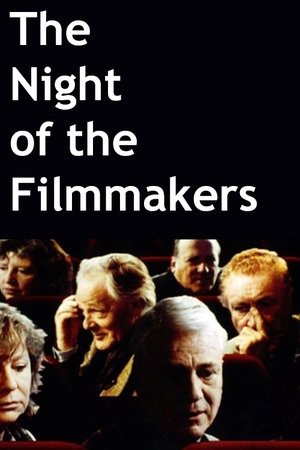
The Night of the Filmmakers

A meditation on the first 100 years of German cinema, featuring an assembly of German filmmakers.

Release Date1995-02-12

Charactersd Self

Vote Count4

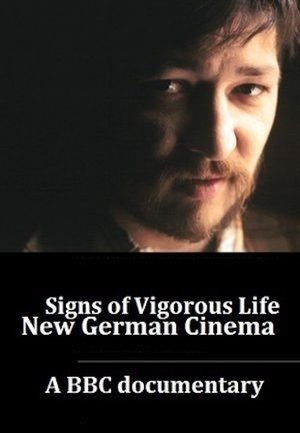
Signs of Vigorous Life: The New German Cinema

BBC documentary about the rise of the New German Cinema and several of its most important figures.

Release Date1976-12-02

Charactersd Self

Demmin Cantos

Hans Jürgen Syberberg grew up in the town of Demmin, the subject of his current film. The history of the town, in which a mass suicide with hundreds of deaths took place at the end of the Second World War, plays an important role. In his film, Syberberg documents his attempts, initiated decades ago, to re-establish Demmin's central market square as a place of community. A café was revived where people could watch films, drink coffee and sing together. Two architectural firms even presented concrete plans for a redesign of the square. Syberberg's commitment is not intended to restore "old conditions", but to give a place and a community back its lost center.

Release Date2023-12-07

DepartmentEditing

JobEditor

Charactersd Self

Karl May

This ethereal, three-hour biopic starring Helmut Käutner as the writer Karl May interprets «a German hero's life» and thereby paints a picture of an entire era.

Release Date1974-10-18

DepartmentDirecting

JobDirector

Vote Count1

Parsifal

A psychological interpretation of the opera mixing in references to the history of Germany, Wagner’s life, German literature and philosophy. The action is centered on Wagner’s death mask. Kundry is the main character – one might read the film as the story of her redemption rather than that of Amfortas.

Release Date1982-04-30

DepartmentDirecting

JobDirector

Vote Count12

Karl May

Karl May

The last ten years in Karl May’s life. A man fighting for his work, which lets him become an iconic figure of his time.

Release Date1974-10-18

DepartmentDirecting

JobDirector

Episode Count2

Nightsong

Behind the pulpit of the Gothic church, speakers take turns. A thousand names are written on the rustling pages: that’s how many people committed suicide in the town of Demmin in the spring of 1945. For decades, their fate was a taboo subject in Germany. Eighty years after the end of the war, the film classic Hans-Jürgen Sieberberg voices their names and, with the help of Mozart and Brahms, performs a requiem for them, creating a space of remembrance and cross-border cultural solidarity.

Release Date2025-09-28

DepartmentDirecting

JobDirector

Fräulein Else

TV adaptation of Arthur Schnitzler’s eponymous book with Edith Clever as the only film actress.

Release Date1987-02-28

DepartmentDirecting

JobDirector

Vote Count1

The Night

An installation film that consists of a six-hour-long monologue performed by Edith Clever, who reads texts by Syberberg and many different authors, such as Johann Wolfgang von Goethe, Heinrich von Kleist, Plato, Friedrich Hölderlin, Novalis, Friedrich Nietzsche, Eduard Mörike, Richard Wagner, William Shakespeare, Samuel Beckett, and Chief Seattle.

Release Date1985-05-08

DepartmentDirecting

JobDirector

Vote Count3

Hitler: A Film from Germany

A structure-free, four-part examination of the rise and fall of the Third Reich. Each part explores a different topic, from Hitler's cult of personality in propaganda to how said propaganda was associated with pre-Nazi German cultural, spiritual, and national heritage to the Holocaust and the ideology behind it, particularly from Himmler's point of view.

Release Date1978-06-07

DepartmentDirecting

JobDirector

Vote Count27

The Marquise of O.

Edith Clever recites the complete text of The Marquise of O. by Heinrich von Kleist.

Release Date1989-11-08

DepartmentDirecting

JobDirector

Vote Count1

Die Grafen Pocci - einige Kapitel zur Geschichte einer Familie

The noble family of the Poccis owns the Ammerland castle on Lake Starnberg. The current lord of the castle leads a secluded, small life as a farmer, Unimog driver, horse lover, drummer and soccer player.

Release Date1968-03-10

DepartmentDirecting

JobDirector

Vote Count1

Nach meinem letzten Umzug...

The film features footage of three productions by the Berliner Ensemble from 1953: excerpts from performances of Puntila and Mutter, as well as a fairly detailed recording of the dress rehearsal for Urfaust. The production of “Urfaust,” created in collaboration with Egon Monk, had aroused the displeasure of SED cultural officials. Syberberg and Germanist Prof. Dr. Hans Mayer discuss the controversy.

Release Date1972-06-25

DepartmentDirecting

JobDirector

Vote Count1

Edith Clever liest Joyce

In her Berlin apartment, where the S-Bahn and long-distance trains pass by, the actress Edith Clever reads Molly Bloom’s monologue from James Joyce’s “Ulysses”.

Release Date1987-07-05

DepartmentDirecting

JobDirector

Vote Count1

Penthesilea

In Heinrich von Kleist's "Penthesilea", war, the death of love and erotic cannibalism merge into a battle of the sexes. The drama, which was published in 1808, was not premiered until 70 years later. It is considered almost unplayable. Edith Clever and Hans Jürgen Syberberg have remembered that Kleist's "Penthesilea" was already read as a monologue in the time of its author and supplemented by pantomime on stage. In November 1987, they continued this tradition at the Théâtre des Bouffes du Nord in Paris: Edith Clever performed the play without lines and role changes, as a single long poem.

Release Date1989-11-21

DepartmentDirecting

JobDirector

Ludwig – Requiem for a Virgin King

Reflected in an artificial and bombastically staged illusory world with Wagnerian compositions, glossy and satirical time references, 19th century German figures and traditions are stripped of their mythology and interpreted by the Germany of 1972.

Release Date1972-06-22

DepartmentWriting

JobWriter

Vote Count13

Wilhelm von Kobell

A short film by Hans-Jürgen Syberberg.

Release Date1966-01-01

DepartmentDirecting

JobDirector

Vote Count1

Nietzsche: Ecce Homo

This Ecce Homo is an impressive statement of life beyond the death of an artist "of the descent of Dionysus".

Release Date2003-05-09

DepartmentDirecting

JobDirector

A Dream, What Else?

A requiem for the now-defunct German state of Prussia.

Release Date1995-02-17

DepartmentDirecting

JobDirector

Vote Count1

Der Gang auf den Berg

An ascent to the mountain in Tyrol with the music of Mozart.

Release Date1997-01-05

DepartmentDirecting

JobDirector

Mozart Requiem mit dem Finger gelesen

'Mozart Requiem mit dem Finger gelesen' belongs to a group of 31 films which were made for the room 'Cave of memory' at Documenta X (1997).

Release Date1997-01-07

DepartmentDirecting

JobDirector

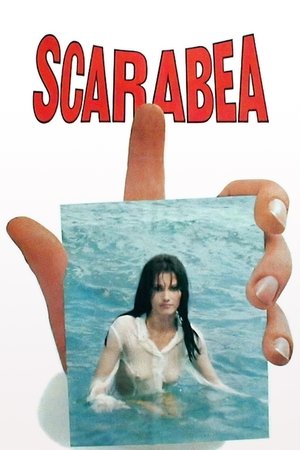
Scarabea – How Much Land Does a Man Need?

A Teutonic lecher on vacation has a wager with some local peasants that he can't make a walking circle from sunrise to sunset to secure some coveted land. The middle-aged businessman embarks on his journey only to be slowed down by the beautiful reporter Scarabea. With thoughts of drunkenness and sex on his warped mind, the man tries to circumnavigate the parcel of property. The story is a retelling of an ancient folk tale told by Tolstoy where the initial victim bets his soul to Satan against the land he desires.

Release Date1969-01-10

DepartmentDirecting

JobDirector

Vote Count5

The Confessions of Winifred Wagner

Winifred, the geriatric daughter-in-law of the famed composer Richard Wagner, talks about her cultural and political influence during the Third Reich. Yet in contradiction to the films's title, Winifred confesses nothing. The contradictions within her discourse do, however, reveal the extent of her delusions and political commitment as an unrepentant fascist. She paradoxically describes herself as a completely apolitical being, adamant that her classification as a grade three Nazi at the end of the war was a grave injustice. Still Winifred cannot contain her amusement when she recalls that after the collapse of the Third Reich, she was the only person left in Germany who would admit that she was a Nazi.

Release Date1978-03-23

DepartmentDirecting

JobDirector

Vote Count5

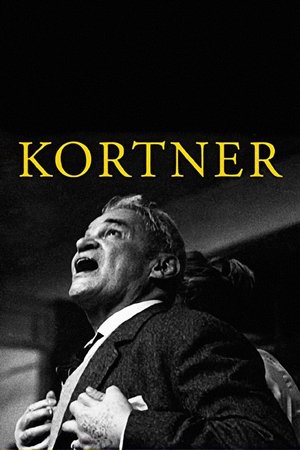
Fünfter Akt, siebente Szene. Fritz Kortner probt Kabale und Liebe

This documentation of a Kortner stage rehearsal shows in detail and fascinatingly how Kortner developed psychological tensions with meticulous precision in linguistic expression and gestural construction.

Release Date1965-05-19

DepartmentWriting

JobWriter

Vote Count1

San Domingo

This surrealistic experimental film finds the son of a young nobleman staying with hash-smoking hippies in a seamy section of Munich. He falls for a hippie girl who is involved in shaking down the young man's parents for money. She falls in love with the young man but the group continues to extract money from the parents in return for their wayward son. When he discovers the shakedown, his rage leads to tragedy for the star-crossed lovers.

Release Date1970-11-10

DepartmentDirecting

JobDirector

Vote Count4

Theodor Hierneis oder Wie man ehem. Hofkoch wird

The film consists of a monologue performed by Walter Sedlmayr, who plays Theodor Hierneis, the chef at the court of Ludwig II of Bavaria. The screenplay was written by Syberberg and Sedlmayr and is based on the memoirs of Hierneis.

Release Date1973-05-05

DepartmentDirecting

JobDirector

Vote Count4

Fritz Kortner spricht Monologe für eine Schallplatte

Fritz Kortner performs a monologue.

Release Date1966-07-05

DepartmentDirecting

JobDirector

Vote Count1

Brecht Urfaust

Documentary images of scenes filmed at the Berliner Ensemble, during one of the final rehearsals.

Release Date1953-01-01

DepartmentDirecting

JobDirector

El Mito de Narciso

"Life is a latency that as time and space becomes visible as a figure. But never eat at all, there are other possible lives. Making a life is difficult, filming the impossible itself . with this imago-auto-bio-graphy is an attempt to talk about this ambiguity, where what could be is the possibility of a memory, where what was and what was not, can be remembered in the same way, . always I lived with mixing the imagined thing is chosen in this chancy; go left on the road the other films that might have emerged" -Narcisa Hirsch

Release Date2011-01-01

Vote Count1