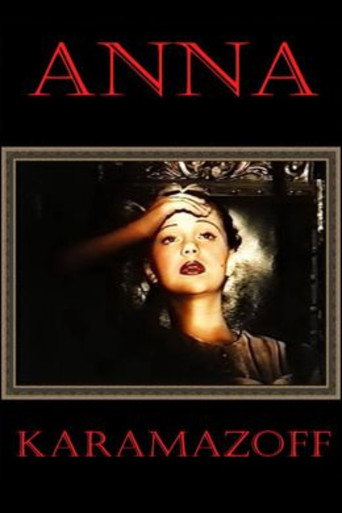
"Anna Karamazoff," a 1991 cinematic gem co-produced by Victoria Film and Mosfilm, emerges as a compelling fusion of French and Soviet filmmaking prowess. Directed by Rustam Khamdamov, this enigmatic film weaves a tapestry of surrealism and psychological depth, drawing inspiration from the works of Fyodor Dostoevsky and the life of silent film star Asta Nielsen. Set against the backdrop of the tumultuous early 20th century, the film follows the titular character, Anna, as she navigates a world teetering on the edge of revolution and personal transformation. The film's lush visuals and intricate narrative structure create an immersive experience that challenges viewers to delve into the complexities of identity and art. The film's aesthetic is a testament to Khamdamov's meticulous attention to detail and his reverence for the silent film era. Cinematographer Yuri Klimenko's use of sepia tones and deliberate pacing evokes the atmosphere of early cinema, while the elaborate costumes and set designs transport the audience to a bygone era. The haunting score by Sergei Kuryokhin complements the film's dreamlike quality, enhancing the emotional resonance of Anna's journey. This visual and auditory feast not only pays homage to the past but also reimagines it through a modern lens, making "Anna Karamazoff" a standout in the realm of arthouse cinema. At its core, "Anna Karamazoff" is a meditation on the nature of performance and the masks we wear in our daily lives. The protagonist, portrayed with captivating intensity by actress Jeanne Moreau, embodies the struggle between public persona and private self. As Anna grapples with her roles as an actress, a lover, and a revolutionary, the film explores the fluidity of identity and the power of art to both liberate and constrain. This thematic richness is further enhanced by the film's non-linear narrative, which invites viewers to piece together the fragments of Anna's life and reflect on their own experiences of self-discovery and reinvention. "Anna Karamazoff" stands as a bold and innovative collaboration between French and Soviet filmmakers, showcasing the potential for cross-cultural dialogue in cinema. Its release in 1991, a pivotal year marked by the dissolution of the Soviet Union, adds a layer of historical significance to the film's exploration of change and continuity. Despite its limited commercial success, "Anna Karamazoff" has garnered a cult following among cinephiles who appreciate its artistic daring and philosophical depth. As a testament to the enduring power of film to transcend borders and time, "Anna Karamazoff" remains a captivating and thought-provoking work that continues to inspire and challenge audiences today.
*If our moderation approves your version, it will be replaced and you will be credited as the text author.
Year1991
Runtime125 min
GenresDrama
Production countriesFranceSoviet Union