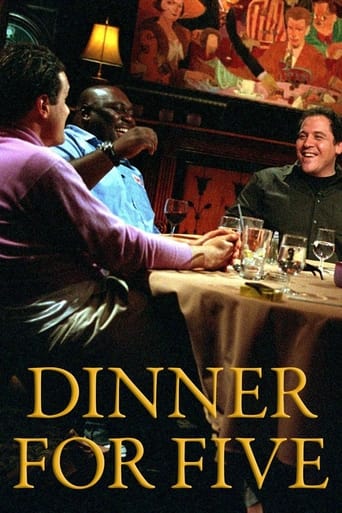
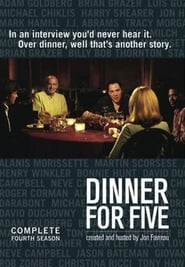
Dinner for Five from 2001 feels like stumbling into a lively dinner party where the guests just happen to be actors and filmmakers worth listening to. The setup stays simple: a round table, good food, and Jon Favreau steering the talk without forcing it. Stories come out in fits and starts, sometimes funny, sometimes surprisingly raw, and the lack of a rigid script keeps everything grounded.
Fairview Entertainment handled production in the United States of America, and that choice shows in the relaxed tone. No studio audience, no flashy cuts, just extended conversations that wander into career regrets, lucky breaks, and the odd tangent about bad auditions. Episodes run long enough for real chemistry to build, which is probably why certain moments still stick with viewers years later.
What sets Dinner for Five apart is how ordinary the whole thing looks while delivering sharp insights. Guests drop their guard because the setting encourages it, turning what could feel like another promotional stop into something closer to actual connection. The series never pretends to be high art, yet it captures the film world better than most polished documentaries manage.
Fairview Entertainment kept the focus tight on those dinners, letting the United States of America locations and casual vibe do the heavy lifting. For anyone curious about how movies actually get made, the 2001 run offers plenty without the usual industry gloss.